Wednesday, 1 May 2013

Film Essay - Mystic River


                                                      Film Essay
Mystic River-
If you watch the first five minutes of the film Mystic River it doesn’t explain what the film is about or what is going on, it just introduces the characters and then one of the kids is taken by a scary looking man in his car, this made me very confused and the only enigma codes that I could spot was the drivers ring, this made me very worried and I couldn’t understand why the kid got into the car, this is why directors are very successful with creating films that make people want to carry on watching, because the suspense and cliff hangers which are built up in the first five minutes through enigma codes, character introductions and camera angles really capture you and make you think deep into the film.
Mystic river uses tension to build up characters and setting, the way they use high key lighting makes it look like it’s a bright day and makes it seem as though nothing is going to go wrong and makes you think that the kids playing in the street are safe and nothing is going to happen, then the tense music is queued and you know something is about to happen. The characters are introduced to the viewers very well, the way the three kids write their names in the pavement shows that they are rule breakers and this gives you an idea that they aren’t going to be very well behaved when they are older and will probably get into trouble later on in the film. The tall guy in a suit who turns up in a blacked out car was made to be very strong and superior by the use of low key lighting to make him look scary, and the way the director has used a high angled shot also gives the image that he is a very superior and strong character that will be a key part to this film. When the driver of the car leans over to see the young boy in the back all you get to see is the ring on his finger which has a big cross on it, this is a prop which could also be a key part of the film, and this is what is called the Mise – En – Scene. As well as the ring being a key prop the location is also important, if you watch the film closely you can see that the drain says ‘Boston’ on it which gives you the location of the film. All of these things that make up the film are connected along the storyboard by what’s called Enigma Codes. An enigma code controls what the audience sees or knows, they are basically clues throughout the film, which can be recognised by viewers, this then add thrill and suspense to the film because you’re thinking of all the different scenarios that could happen and you don’t know which one is the correct one, this is what gives a thriller its edge and makes people want to keep watching, to find out what happens.
As well as lighting, camera angles, ect, sound and music is also used to build tension, atmosphere, and mood. Music is used frequently throughout this film, this is a good technique to get the audience at the edge of their seat, for example in Mystic River when the car pulls up outside the houses music starts building, and by the time the guy has got out of the car it is at its peak point and the music just stops, this is so that when the music is building up and getting louder you are waiting for something to happen, then you see the guy in a suit and the music cuts. If the tense music isn’t bad enough, there are a lot of close ups of the guy that has just got out of the car, this shows the expression on his face which wasn’t too happy, it is very effective, also when he talks to the kids they are being filmed from a low angled shot, this is to show insecurity and vulnerability.

Looking back at your prelim task, what have you learnt in the progression from it to the finished product?

From the prelim task, i feel that myself and the rest of my group have learnt an awful great deal in relation to the progress of our full product. In the preliminary task we focused on lots of in-action shots to build up a video of the door opening from different camera angles. We found this very hard to stick to the 180 degree rule but our knowledge of this developed as we progressed. Our editing skills were no where as good and experienced as they are now. However, since then they have improved as we got to know the software better and get a better understanding and knowledge of it. As well as this our knowledge for the use and names of camera shots and angles have improved vastly; we now know what each shot is, how to use it, and what effect it gives the viewer. For example a high angle shot would be used to show superiority. We used a lot more close up shots in Broken Developments as we felt it created more suspense and atmosphere within the scene, as you cant see whats around the scene, only whats in the shot; which was very little. As well as this it made the sequence more personal to the viewer. The changes between our first rough cut and our final piece had noticeable changes in the sense of music and the editing pace. Although our final piece had less camera shots, it seemed more effective to the audience in the sense that the fast and close shots suggested a sense of urgency and thrill/suspense. And finally, our final product followed a story line  where as our prelim task did not.


Target Audience and Research continued.

At the beginning of our research and planning we decided to try and obtain a better understanding of our target audience, to do this we wrote up questionnaires that contained multiple choice answers on the genre of horror film, leading on to the more specific sub genre of a psychological thriller. Within the questionnaire the target audience were aloud to give their own ideas and perceptions of a typical thriller and what else they would like to see within a thriller film. We also did this by getting feedback after we had created the first draft of our final product. We sat our peers and class mates down and asked them to write what they thought we could improve on. This audience feedback was a key part of our product development. It allowed us to use the criticism as constructively as we could, and to develop on what our peers thought we could. It is incredibly important for the audience and readers of the media products to relate to the genre as they are the consumers of the product, therefore they are key to the production of the tasks. From audience feedback I learnt that it is important to have constant feedback throughout the different stages of design and production. For example in the construction stages of our tasks, feedback from the audience allowed us to develop and progress our product so it was to a high standard and would achieve a high grade.

What have you learnt about technologies in the process of constructing your film?


  I have learnt many things about technologies in the process of constructing my film sequence. New media technologies were vital for the construction, research and planning of our thriller trailer. For the construction and editing of my product we used Final Cut Pro, Sound Track Pro and Garage Band on a Macintosh. As well as this i used, Microsoft Office programs such as Word and publisher to write up analysis’ etc. I had never used these programs before and i am now very comfortable with using them and i have learnt a lot from them. For the planning, i created storyboards that i was able to edit and change before scanning and uploading to my blog for further feedback. For my research i used Google to search for helpful sites that improved my understanding of films and the codes and conventions of a Thriller Film. I also used sites such as YouTube and Vimeo to view Horror and Thriller trailers, to get ideas to influence my media product. As well as this i used IMDb to get names of directors and to search for more Horror and Thriller films to get ideas for the credits etc.

        Before Colour-Correction...


 After Colour-Correction...


     SoundTrack Pro...


     Final Cut Pro with SoundTrack...

Who would be the audience for your media product?

The audience for our media product will be aimed at students participating in further education such as high school/sixth form/college/university. The certificate of Broken Developments is 15. There is no high class violence or offensive language and we also aim broken developments at people who are in services to the public such as teachers or shop assistants as the same thrill could be brought to them as well as the 'college kids', as it isnt too sophisticated and was produced on a very low budget. The certificate of a 12A stand for 'accompanied' which means children under the age of 12 may go and see the film as long as they are accompanied by an adult over the age of 18. The DVD release may be affected if there is too much swearing or can be seen as a violent or inappropriate films. In this case the film will be adjusted to at 15+. 12A's may include brief sexual scenes suitable for young teenagers and some moderate sex references may be included but frequent crude sex referenced are less likely to be tolerated by a 12/12A. Dangerous behavior such as suicide or self-harm may be present in a 12/12A but should not linger or dwell on the circumstances or detail of the event so copying is unlikely and it seems harm-free and painless.

What kind of media institution might distribute your media product and why?


Due to our low budget in producing our media product, Film4 would be the most suitable media institution to distribute Broken Developments. This is because of audience and age. Film4 uses summer screening at Somerset house to introduce different types of film which they are distributing. Film4 is owned by Channel Four Television Corporation and has been responcible for backing a large number of films which ate made in the United Kingdom and sometimes all around the world. The company’s first release date was in 1982 and this was the start of something very big to come. We chose this institution because we knew it would benefit our taget audience, as it is unlikely to be screened in a cinema; and is more likely to be streamed on sites such as NetFlix or LoveFilm, or it may be screened on television. Most of our target audience would watch movies online or on T.V in their spare time so that is another reason why we thought Film4 would be the perfect institution to distribute our product. And finally, it’s a British institution, and therefore we would be promoting a British organization; compared to promoting a more popular one;   Universal or Sony.


How does your media product represent particular social groups?


  Our media product represents specific, yet different social groups. We took into consideration that the age of our viewers would be from 16+. This meant that we had to base our opening sequence so that people that attend college, or were upper class could relate to it; as well as working class civilians too. This also meant that we had to construct the story line so that students wouldn't find it too boring, but we had to make sure that it didn't come across as immature either, as not only students but older viewers would be watching it as well, from businessmen, to young couples. This media product characterizes students as the main focus; as the actors in it are students and we feel that it would relate to them more than anyone else. Though in the long run it may make them feel insecure or scared in certain ways; because of the way we set the sequence out. This is not the main aim to our media product, it s a helpful and ky part to making it successful as it could possibly increase the viewership and the vastness of the audience. Laura, the protagonist, is represented as a very stereotypical teenage girl; blonde, cute, innocent looking and vulnerable, this was done to enforce the thrill. And the complete opposite character was used for the antagonist, dark eyes, dark hair; this created a creepy, dangerous and effective character in my opinion. And although the protagonist (me) is hardly ever seen, when he is; he has no facial expression and is always dressed in dark black clothing; representing a very stereotypical antagonist.

How did we attract our audience?

We attracted our audience by making the protagonist relatable to the audience. This would bring more thrill to the sequence and will enforce the audience’s expectations of a typical movie thriller. In broken developments we represented social class through technologies and costumes of each character. For example the use of old school cameras by the antagonist (me) highlighted my isolation from the world, how I was almost in my own world. Nowadays not many people use film cameras to photograph; instead they use digital cameras to gain high quality. As well as this, Laura (the protagonist) was wearing a fairly modern barbour jacket, and jeans; which is very stereotypical as that is what most girls of our age and generation would wear out. There is no dialogue in the opening sequence; this is done so that later on in the actual film, the accents of the characters will show where they are from etc. This will then give the audience an idea of where the sequence is set (South East England). Age is represented through the ages of the characters. Within Broken Developments, the characters ages are not blurted out straight away, they are kept secret and will reveal themselves as the sequence prevails. For example filming laura leaving college etc.The age of the characters, especially Laura; should relate the the audience and this should give them the experience of more thrill due to the age of the character, and the age of the audience themselves. A good example of this would be The Crash. This television show is aimed at young adults and teenagers that can drive or have friends that can do so. By using young characters, the same age as those watching; bbc make the programme much more realistic, and leave the audience putting themselves in the position of those on the show. Gender is a similar in this aspect. The fact that we kept to the codes and conventions of classic thriller films by keeping a male antagonist and a female protagonist will attract both sides of the audience, as females are more innocent acting and are stereo typically the victims in thriller films; and males are strong and scary and are usually the villain or criminal. The use of these representations will attract the audience by making them feel as though they are in the same position as Laura McClean or Charlie Boyden. Finally, the use of Film4 as our sponcer will also attract our wide target audience as it is a low budget institution but is still well known for producing good and popular films

  .
The Crash, BBC3

In what ways does your media product use, develop or challange forms and conventions of real media products?


My media product uses forms and conventions of real media products through the use of genre; opening sequence codes include a variety of shots, editing, settings, characters, narrative, music, and titles. In my media product i have tried to combine and create an opening sequence that has aspects of horror but to try and remain less gory and ‘‘slasher’’ style than most movies, and more of a ‘‘stalker’’ style. I wanted to create an opening sequence that was based around one man who was stalking a young girl and kind of pushing into the psychological thriller sub genre.


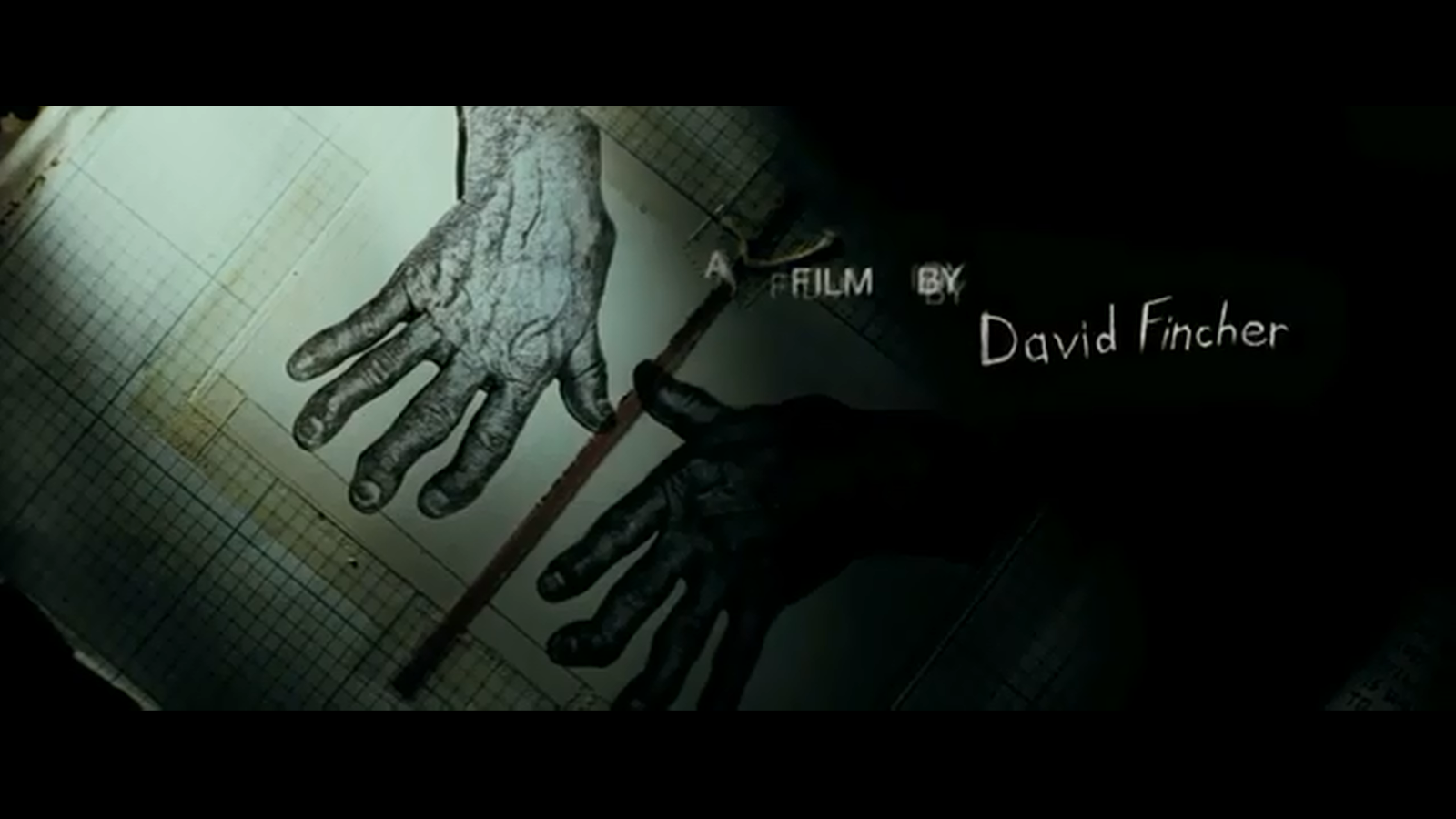
My thriller sequence utilises and challenges the forms and conventions of a thriller genre, including the bloody horror film genre and more evidently psychological thriller. The genre of opening sequence i have chosen is a hybrid genre of Horror film. I have noticed that common conventions from thriller openings usually contain fast cuts with a little sophistication in the music chosen, and jumpy noises accompanied by screams and other non-diegetic sound such as camera flash noises etc, that was edited in using Soundtrack Pro; which was added for dramatic effect, and to surprise the viewers. This is evident through many David Fincher films. In Seven, Fincher creates suspense and establishes enigma codes through the use of mise-en-scene; such as props like cameras, knifes, guns, pictures and such things as camera angles and shot types. He uses lots of close ups, and the editing pace is quite fast, this makes the audience continuously feel like the images and shots are flying towards them because they are being cut from one shot to the other so fast. This style of editing created enigma codes and builded up suspense, because the antagonist's identity wasn't revealed; leaving the audience questioning the characters motifs.


Opening sequence to David Fincher's, Seven.


I wanted to include a similar style to that of David Fincher. I would do this by using fast cuts, short shots, close ups of everything in the scene, the use of props and other iconography; such as the use of the colour red. As well as this i want the suspense of the film to build up by the audience not seeing the antagonist throughout the whole opening sequence. The protagonist was Laura McLean, she is a typical protagonist, innocent looking, blonde hair, very venerable when she is on her own, and likes to dress in the colour red, she has a special red scarf which she wears everywhere. This was a key enigma code throughout the whole sequence, as well as the colour red.

This is a clear show of enigma codes, using the colour red.

In my research i have challenged the codes and conventions from real media texts and many conventions have evidently influenced my final product.
A typical thriller convention and similar to the Horror genre is the focus of the main character who has a troubled or ominous background. Typically a male character, i have decided to develop and remain with this distinctive convention as it allows for the audience to clearly see the focus of the movie. Mystery and drama are evident traits of the thriller genre. Although not a psychological thriller, i challenged forms and conventions from Taratino’s teaser trailer for Kill Bill. Though it takes a slow paced editing technique from the very beginning, that steadily increases in pace through shot movements and fast cuts etc. I developed these conventions through my editing style which is evident in the opening sequence.

Kill Bill also uses the colour red to portray enigma codes of whats to come.

Recce Report

This is the Recce Report for our film.

The top picture is the woods where we filmed our chase scene. It is located in Elmbrook Estate, Ipswich. It was a good location to film because there wasn't any people around, so it was quiet and because it was a scary looking forest which we knew straight away should be the set up for our opening sequence. And it was close to Suffolk One so we didn't need to travel far to film.

The middle picture is located in a field just next to the forest. In Elmbrook Estate, Ipswich. This was a good location because you could see the rustic nature of the location, and you could tell by the look of the field that it was a perfect place for a crime to take place.

The bottom picture is located at Suffolk One Sixth Form, in Ipswich. This was a good place to film out footage because it was easy to do, we had all the equipment we needed and didn't need to travel to a house to film, and we had a green screen to edit out the rest of the room.


Friday, 18 January 2013

Video Influences- Se7en.


                    ^^^^^^^^^^^^^^^Above is the link to the YouTube trailer^^^^^^^^^^^^^^^^


Seven clip

Seven is a key influence to our thriller, this is because of the way the enigma codes almost flash up on the screen like flashbacks; the dramatic music and the way the titles are embedded in the opening sequence. We liked this because it was unpredictable, jumpy and keeps the audience guessing as to what is going to happen in the movie... This is done through fast editing pace, which means the space between each different shot is limited; giving the film a faster and more up tempo feel. As well as this the Non-Diegetic sounds that are edited in as the different camera shots are put together so that it causes a fright. This was very effective. Continuing on with the other techniques being very effective and eye catching. This is why we chose to base our editing around this film. 

Our StoryBoarding


Our initial idea- Mr Grevor


Team members - Sarah Adnams
                         - Laura McLean (actor)
                         - James Knuckey
                         - Charlie Boyden (actor)
                         - Jasper Adnams (dog actor)
Laura and Charlie were perfect for our Thriller opening sequence because we felt that they were "typical" protagonists and antagonists.
With Laura as the protagonist; we felt this was very stereotypical. Laura is blonde which is a very 'girly' aspect for a protagonist.
Charlie has dark hair which adds to the mystery of our thriller as you never see the antagonist's face

Title Research - Choosing a font.


Title research


Mr Grevor – Bauhaus 93
Mr Grevor – Apple Chancery
Mr Grevor - Chalkboard

Mr Grevor – American Typewriter

Mr Grevor – Modern No. 20
Mr Grevor – Engravers MT
Mr Grevor – Thonburi
Mr Grevor – Century Gothic
Mr Grevor – Desdemona
Mr Grevor – Gloucester MT Extra Condensed
Mr Grevor – Lucida Fax
Mr Grevor – Ayuthaya
Mr Grevor – Edwardian Script ITC
Mr Grevor – SimSun ExtB
Mr Grevor – Papyrus
Mr Grevor - Rockwell

We decided to use American Typewriter because it was quite traditional and fitted with the effect of Charlie typing on the laptop. It seemed quite ordinary just like the name 'Mr Grevor' - there is no immediate danger relayed to the audience at this point. 
We also decided to go for a traditional 'white writing on a black background' so that we could add effects such as a camera flash or a typewriter effect.

Proposal


Proposal

With this opening sequence we are hoping to create a conventional and stereotypical thriller including a stalker. The audience is gathering information of each character and is immediately introduced to both of them. With flashes of Charlie's plans the audience have a grasp of his mind set. The fact that it is a stereotypical "stalker thriller" the audience knows what fate lies for Laura.

Camera shots such as close up shots hint to the viewer the main enigma codes, danger and create a dramatic atmosphere of suspense. Using long shot of the brook expresses vulnerability and also establishes the setting of the movie. Where it is set. 

Wednesday, 16 January 2013

Treatment - Mr Grevor


Treatment - Mr Grevor

Itʼs a normal day; Laura is walking her dog at the brook, Charlie is watching her. Laura doesn't see Charlie but the audience does. This alone is an enigma code expressing that Charlie has something to do with Laura. This opening sequence is from an outsiderʼs point of view. The audience can see what is happening to the characters but they are unaware of each otherʼs circumstances (dramatic irony.)
The purpose of the film is to thrill the audience; build anticipation and to keep them guessing resulting in a satisfying ending. This opening sequence is act as a cliff hanger to draw in the audience without revealing the key events of the overall film. Using enigma codes in this opening sequence; the audience can gather suggestions as to what the film involves.

Flashes of enigma codes come up as do the titles to hint to the audience what the film will include.
1. Equilibrium (calm, walking dog, normal day, nothing suspicious)
2. Interrupt (cut to Charlie taking photos of Laura, cut to him in a room, close up of eyes)
The codes and conventions of a thriller which we are going to use are 
- antagonist (male)
- protagonist (female)
- enigma codes - props (scarf, dog, camera, laptop, voodoo doll)
- donʼt see the antagonistʼs full face - identity
- lighting (shadows, hard light)
- music (scary, unpredictable, dramatic)
- titles (flash of light, camera - enigma code) - sound (diegetic and non-diegetic)
- colours (red, danger, eye-catching)

- mise-en-scene (dark, scary, unaware, unpredictable)

Tuesday, 8 January 2013

Audience


Who is your audience?


16-25 year olds 
Unisex 
Students, casual workers 
Multinational 
Demographics - E, D, C1, C2, B and A. Enjoyable for people of all backgrounds. Full of enigma codes - sets up expectations and anticipation 
Conventional thriller - not funny, dark, classic protagonist and antagonist
Strugglers - they seek escape from reality
Explorers - they seek discovery. They will predict the course of events within the film 
Relates to Seven